
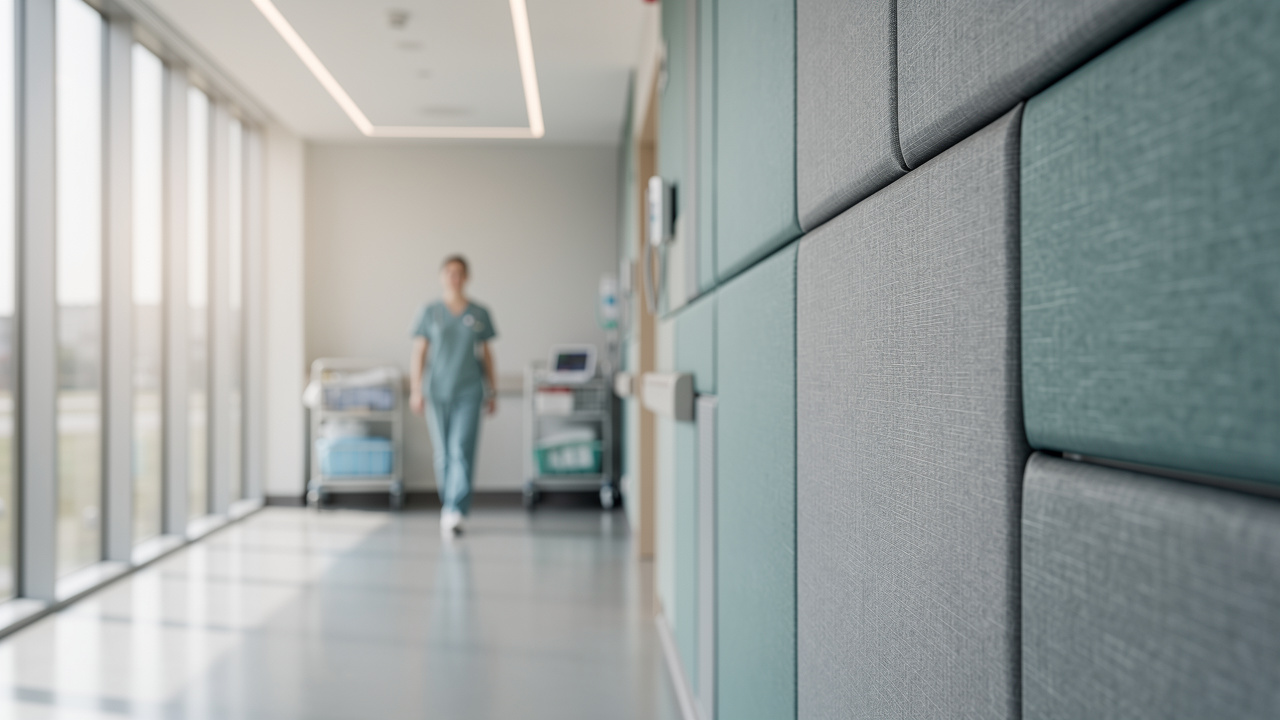
Healthcare facilities across Pennsylvania face a noise problem that most other commercial buildings never have to solve at the same level. Hard floors, long corridors, and rooms full of monitoring equipment turn ordinary hospital sounds into constant background noise that affects patients trying to rest and staff trying to concentrate. Acoustic wall panels for Pennsylvania hospitals, clinics, and medical office buildings offer a direct answer to this problem, cutting reverberation while supporting the privacy and hygiene standards clinical spaces demand.
This article looks at what makes healthcare acoustics different from a typical office or hotel installation. It covers which panel materials hold up best in patient rooms and corridors, what fire and safety codes apply to Pennsylvania healthcare construction, and how a supplier like DeSound fits into a hospital’s renovation or new-build timeline. By the end, architects, contractors, and procurement teams should have a clear framework for specifying acoustic wall panels that meet both performance requirements and patient-experience goals.
Key Takeaways
Acoustic comfort connects directly to patient satisfaction scores measured through HCAHPS surveys.
A Class A fire rating under ASTM E-84 is a baseline requirement for healthcare specification, not an optional upgrade.
PET acoustic panels balance sound absorption, cleanable surfaces, and design flexibility in one product.
Bulk supply and short lead times matter more in healthcare because renovations typically happen in phases.
DeSound’s ready-stock inventory and CNC-cutting capability fit the procurement needs specific to healthcare projects.
Why Do Healthcare Facilities Need Acoustic Wall Panels?

Healthcare facilities need acoustic wall panels because hard, easy-to-sanitize surfaces reflect sound instead of absorbing it, turning routine hospital activity into disruptive noise. Long corridors carry footsteps, cart wheels, and conversation far past their intended range, while shared walls between patient rooms let private discussions travel farther than they should. Nurses’ stations, often built with hard countertops and tile flooring, tend to become noise hot spots that make it hard for staff to communicate clearly or take phone calls without raising their voice.
These acoustic problems carry real consequences beyond simple annoyance. Speech privacy at check-in desks and consultation areas connects to HIPAA-related expectations around protected health information, and hospitals are increasingly aware that patient satisfaction scores collected through HCAHPS surveys ask directly about noise levels at night. When a facility invests in sound-absorbing wall treatment, it is addressing patient comfort, staff performance, and a measurable satisfaction metric all at once.
What Types Of Acoustic Panels Work Best In Healthcare Settings?

The best acoustic panels for healthcare settings combine strong sound absorption with a cleanable, durable surface that meets fire code, since clinical spaces cannot compromise on hygiene or safety to gain quieter rooms. Several material types cover different zones of a healthcare building:
PET (polyester) panels, made from compressed recycled polyester fiber, tend to lead the field because they resist mold and bacteria growth while offering NRC ratings strong enough for patient rooms and corridors, a conclusion supported by recent research on waste-based bioplastic wall panels evaluating acoustic, thermal, and structural performance in interior settings.
Fabric-wrapped panels remain common in administrative offices and waiting areas, where their wide color range and Class A fire ratings suit lower-touch, less clinical zones.
Wood-slat and perforated metal panels appear occasionally in hospitality-style lobbies within larger medical campuses, adding warmth without sacrificing the acoustic performance a busy reception area needs.
Choosing between these material types comes down to where the panel sits in the building and how much direct patient contact, cleaning frequency, and fire exposure that zone requires.
| Panel Type | Typical NRC Range | Fire Rating | Best Fit In Healthcare |
|---|---|---|---|
| PET acoustic panels | 0.70 to 0.90 | Class A (ASTM E-84) | Patient rooms, corridors, nurses’ stations |
| Fabric-wrapped panels | 0.75 to 1.05 | Class A (ASTM E-84) | Waiting areas, offices, consultation rooms |
| Sound barrier panels (vinyl septum) | 0.80 (plus STC 25) | Class A (ASTM E-84) | Adjoining patient rooms needing privacy |
PET Acoustic Panels For Clinical And Patient-Facing Areas
PET acoustic panels suit clinical and patient-facing areas because their recycled polyester construction resists mold and bacteria while still cutting reverberation in busy corridors. The material’s cleanable surface holds up under the frequent wipe-downs healthcare housekeeping schedules demand, without the acoustic performance breaking down over time. Custom colors and precision CNC-cut shapes also let design teams build wayfinding cues or calming, nature-inspired patterns directly into the panel layout, so the acoustic treatment does double duty as part of the patient experience rather than sitting apart from it.
Fabric-Wrapped And Fire-Rated Alternatives
Fabric-wrapped panels offer a fire-rated alternative for healthcare zones that see less direct patient contact, such as administrative wings and consultation rooms. Many of these systems reach NRC ratings between 0.75 and 1.05 while carrying the Class A fire rating (ASTM E-84) that healthcare construction requires, and some product lines add a mass-loaded vinyl layer for STC (Sound Transmission Class) performance around 25. These panels tend to fit waiting rooms, staff offices, and administrative corridors better than patient rooms, where a cleanable PET surface usually makes more practical sense.
What Compliance Standards Matter For Pennsylvania Healthcare Projects?

Pennsylvania healthcare projects must confirm three acoustic panel standards together before specification closes, namely NRC performance, STC rating where privacy matters, and Class A fire classification under ASTM E-84, standards examined in case studies measuring airborne sound insulation performance across different vertical partition wall types. NRC measures how much sound a panel absorbs inside a room, which controls echo and general comfort, while STC measures how well a panel or wall assembly blocks sound from passing into the next room, a distinction studied in research on lightweight double leaf wall sound insulation with different stud configurations. Fire rating is the piece with zero flexibility, since Class A panels are the accepted standard for occupied healthcare spaces under most state and local building codes, and specifying anything less risks a failed inspection late in a project timeline.
Beyond acoustic and fire performance, healthcare panel selection has to account for infection control protocols that don’t apply the same way in an office building or hotel. Surfaces need to withstand repeated disinfectant cleaning without losing shape, color, or acoustic value, and any documentation a supplier provides should spell out both the fire testing results and the material’s resistance to moisture, mold, and bacterial growth. Architects and procurement teams who confirm all of these figures before ordering avoid costly change orders once construction is already underway.
How DeSound Supports Healthcare Facility Projects In Pennsylvania

DeSound supports healthcare facility projects in Pennsylvania with Class A fire-rated, high-NRC PET panels built to handle the acoustic and hygiene demands of patient rooms, corridors, and nurses’ stations. The panels are manufactured with the fire safety certifications healthcare code review requires, so architects and contractors don’t have to treat acoustic treatment and fire compliance as separate specification hurdles. Ready-stock availability paired with precision CNC cutting means the company can supply the custom shapes a complex hospital floor plan needs without the long lead times that slow down phased renovation work, and its bulk supply capability keeps color, thickness, and performance consistent across dozens or hundreds of rooms in a single campus rollout. For fit-out contractors managing occupied-building renovations, that consistency reduces the risk of mismatched panels showing up mid-project and forcing a rework.
Custom Design For Patient-Centered Environments
Custom design options give healthcare projects a way to serve patient comfort and acoustic performance from the same product. Over 100 color options and custom UV printing allow architects to build wayfinding systems, branded elements, or calming nature-inspired imagery directly into wall panels without weakening their sound-absorbing function. The technical support team also works directly with architects and procurement managers to confirm that the chosen configuration meets project-specific fire and acoustic requirements before an order ships.
How Should Architects And Procurement Teams Choose A Supplier?

Architects and procurement teams should choose an acoustic panel supplier based on documented performance data, consistent supply, and a track record of meeting large healthcare project timelines. A site assessment should come first, since panel type, thickness, and coverage vary by room type, and a supplier willing to walk through the space before quoting is generally more reliable than one working from floor plans alone. From there, documented NRC and fire rating certificates protect the project during code review, a process outlined in detail in comprehensive sound and fire design resources covering acoustic material selection and testing standards.
Lead times and warranty terms often separate suppliers more than the panels themselves do, especially on hospital systems rolling out renovations across several buildings over multiple years.
The checklist below covers the factors that matter most when comparing options.
Confirm the supplier can provide NRC, STC, and Class A fire rating documentation for every panel type quoted, similar to the specification language found in standard acoustic wall panel guide specifications used across CSI-format project documents.
Check ready-stock inventory and typical lead times, since phased hospital renovations rarely have room for months of delay between rooms.
Ask about consistency guarantees for large or multi-site orders, so color and thickness match across every phase of a rollout.
Review warranty terms and post-installation technical support, which matter more once panels are already installed in occupied clinical space.
The Takeaway
Acoustic wall panels for Pennsylvania healthcare facilities work best when fire safety, sound performance, and cleanability get evaluated together rather than treated as separate boxes to check. PET panels tend to fit patient rooms and corridors well because of their cleanable surface and strong NRC performance, while fabric-wrapped alternatives suit administrative and waiting areas that see less direct patient contact. Compliance with Class A fire rating under ASTM E-84, paired with the right NRC and STC targets for each room type, protects both the project timeline and the people who will use the space every day.
For architects, contractors, and procurement managers managing a Pennsylvania healthcare project, working with a specification-driven supplier makes this process considerably easier to manage. DeSound’s combination of Class A fire-rated panels, ready-stock supply, and custom design support gives project teams a practical starting point for meeting both the acoustic and aesthetic goals a modern healthcare facility demands.
Frequently Asked Questions
What NRC Rating Is Recommended For Hospital Patient Rooms?
Patient rooms generally perform well with panels in the 0.70 to 0.90 NRC range, which absorbs enough sound to reduce echo without over-treating a small space. Corridors and nurses’ stations, which see more foot traffic and open-plan noise, may call for higher absorption. A site assessment is the best way to confirm the ideal rating for each specific room type.
Are Acoustic PET Panels Resistant To Mold And Bacteria?
PET acoustic panels are generally resistant to mold, mildew, and bacterial growth because of their compressed polyester fiber construction, which doesn’t hold moisture the way some porous materials do. This makes them a practical fit for clinical spaces with frequent cleaning. Project teams should still confirm any specific antimicrobial certification a healthcare specification requires.
Can Acoustic Panels Be Installed During Phased Hospital Renovations Without Disrupting Patient Care?
Yes, acoustic panels can typically be installed during phased renovations without major disruption. Ready-stock availability and CNC-cut panels arrive pre-sized for quick mounting, and installation methods like clip systems or direct adhesive mounting keep noise and dust to a minimum. This allows contractors to complete one wing or floor at a time while other areas stay in use.
Do Acoustic Wall Panels Help With HIPAA-Related Speech Privacy?
Yes, acoustic wall panels help reduce speech transfer between rooms, which supports HIPAA-related privacy expectations around patient conversations. NRC-rated panels absorb sound inside a room to cut echo, while STC-rated assemblies with a vinyl septum layer actually block sound from passing through the wall itself. Both properties often work together in sensitive areas like consultation rooms.
What Is The Difference Between NRC And STC Ratings For Healthcare Walls?
NRC measures how much sound a panel absorbs inside the room where it’s installed, controlling echo and reverberation. STC measures how well a wall assembly blocks sound from traveling into an adjoining space. Healthcare walls between patient rooms often need both properties addressed, since comfort and privacy depend on different acoustic mechanisms.
How Do Acoustic Panels Support LEED Or Green Building Goals In Pennsylvania Healthcare Projects?
PET acoustic panels made from recycled polyester content can contribute toward LEED credits tied to recycled material use, giving healthcare projects a practical way to combine acoustic performance with sustainability goals. Procurement teams pursuing green building certification should request documentation of recycled content percentage from their supplier to confirm eligibility for specific credit categories.