
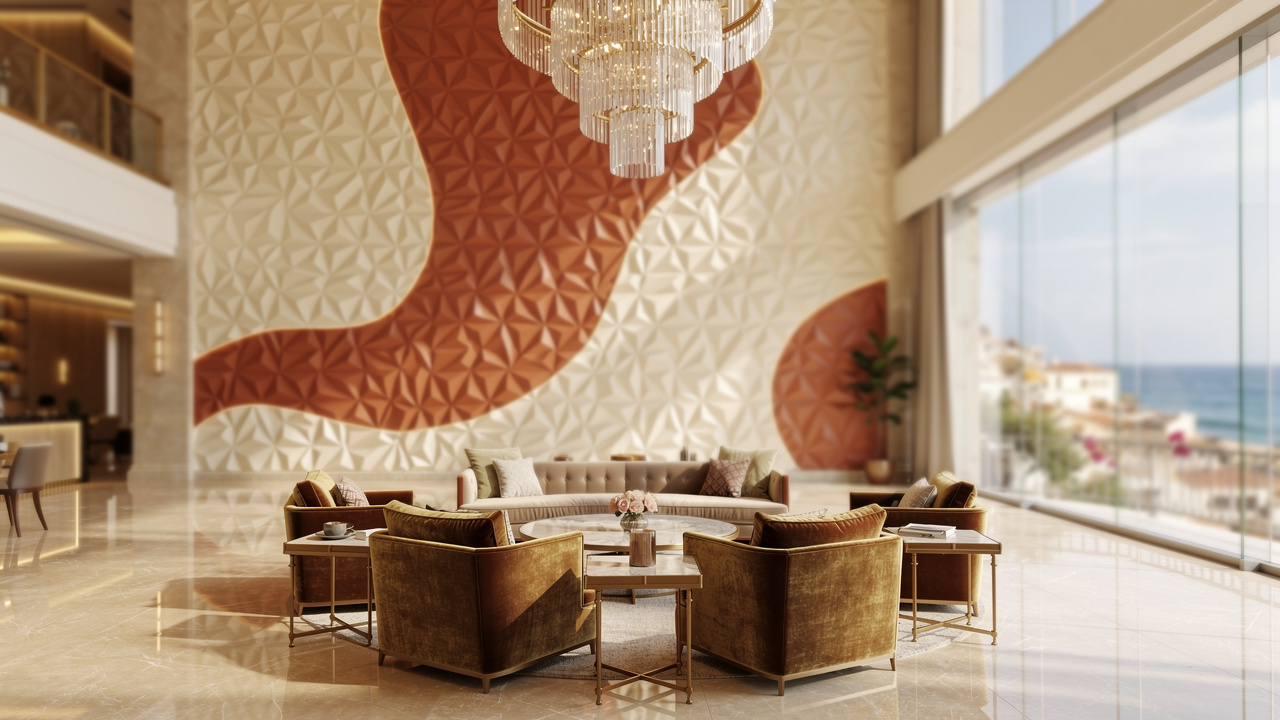
Luxury hotels across Tunisia face a delicate balancing act between five-star design and true acoustic comfort. Marble lobbies, glass-walled restaurants, and soaring ballroom ceilings look stunning in renderings, but they also bounce sound around a room, turning quiet conversation into an echo chamber. Guests notice noise long before they notice good design, and a noisy hotel rarely earns repeat bookings or glowing reviews.
PET acoustic panels for Tunisia’s hospitality sector solve this problem by pairing genuine sound absorption with the kind of finish a luxury interior demands. Made from recycled plastic fibers, these panels control reverberation, meet fire safety codes, and come in colors, shapes, and printed finishes that architects can build a whole design concept around. This guide walks through how PET panels perform acoustically, how they fit into luxury interior schemes, why sustainability credentials matter for Tunisia’s tourism sector, and how to source them reliably for large hotel projects. DeSound, a manufacturer of ready-stock and custom acoustic PET panels, appears throughout as one example of how specification-ready supply works in practice.
Read on to see exactly what to specify, and what to ask suppliers, before your next hotel fit-out begins.
Key Takeaways
Quality PET acoustic panels reach NRC ratings between 0.70 and 0.95, matching or beating traditional mineral wool and fiberglass in most hospitality applications.
Class A fire-rated panels, tested to standards like Euroclass B-s1 d0, are non-negotiable for hotel occupancy permits and insurance sign-off.
Custom UV printing and color libraries of 100 or more shades let acoustic panels double as branded design features in lobbies and restaurants.
Ready-stock supply and consistent manufacturing quality help contractors avoid delays across large, multi-zone hotel fit-outs.
Recycled PET content supports LEED and BREEAM pathways that Tunisia’s tourism developers increasingly pursue.
What Are PET Acoustic Panels and Why Do Luxury Hotels Need Them?

PET acoustic panels are sound-absorbing boards made from polyethylene terephthalate fibers, the same plastic used in beverage bottles, whose recycling has reached the highest US PET bottle recycling rate in decades in recent years. Manufacturers shred recycled PET, melt it, and press it under heat into a semi-rigid, felt-like board without chemical binders, so the finished panel releases no volatile organic compounds, an approach paralleled in studies on multifunctional waste-based bioplastic wall panels assessed for acoustic, thermal, and structural efficiency. Installers handle a lightweight material that doesn’t itch or require respiratory protection, unlike mineral wool or foam.
Luxury hotels need this because guest-facing spaces like lobbies, restaurants, and ballrooms are full of hard, reflective surfaces such as marble, glass, and stone. PET panels absorb sound instead of bouncing it, keeping conversation clear without hiding the room’s design. Their moisture resistance also suits Tunisia’s coastal humidity, keeping panels stable in spa corridors and seafront function rooms.
How Do PET Acoustic Panels Perform in Hospitality Spaces?

PET acoustic panels typically perform between an NRC of 0.70 and 0.95, a rating explained in plain terms by the Noise Reduction Coefficient guide as the average sound absorption measured under ASTM C423, with 1.0 representing full absorption. In a hotel ballroom or banquet hall, a panel rated around 0.90 absorbs roughly 90% of the sound hitting it, though buyers should know what NRC testing results actually reveal about real-world panel performance before comparing datasheets from different manufacturers. Panel thickness plays a big role in this result, with boards commonly ranging from 9mm for light decorative treatment up to 50mm for spaces that need strong low-frequency control, such as ballrooms with tall ceilings and hard flooring. Density, usually measured in kilograms per cubic meter, adds structural rigidity and shifts how the panel handles different frequencies. Mounting method changes performance too, since fixing panels with a small air gap behind them, rather than gluing them flush to the wall, noticeably improves absorption of the lower, boomier frequencies common in large open hotel spaces, a factor also highlighted in guidance on meeting room acoustics for video conferencing that covers RT60 targets and mounting effects.
| Panel Thickness | Typical Density | Best Suited For |
|---|---|---|
| 9mm to 12mm | 100-130 kg/m3 | Decorative wall cladding, corridors |
| 24mm | 130-160 kg/m3 | Restaurants, guest room walls |
| 30mm to 50mm | 160-200+ kg/m3 | Ballrooms, conference halls, atriums |
Fire Safety and Compliance for Hotel Construction

Fire performance is where hotel specifications leave no room for compromise. Quality PET panels are tested to Euroclass B-s1, d0 or equivalent Class A fire ratings, confirming limited combustibility and minimal smoke output, both important for occupancy permits and insurance sign-off in high-occupancy buildings. DeSound’s Class A fire-rated panels are built to meet these strict requirements, giving architects and developers one less compliance risk to manage during hotel construction or renovation.
Can PET Panels Deliver Luxury Design Without Sacrificing Acoustics?

PET panels deliver luxury design because they come in far more than flat, beige boards. Fabricators shape them into 3D geometric wall panels, suspended acoustic baffles and clouds for open atriums, and curved CNC-cut feature walls that follow a lobby’s architectural lines. Rather than hiding acoustic treatment behind fabric or a false ceiling, designers can turn the panel itself into the room’s visual centerpiece.
Custom UV printing pushes this further, letting hotels apply logos, cultural motifs, or custom artwork directly onto acoustic surfaces instead of settling for plain color blocks, a design flexibility echoed in recent research on acoustic performance optimization of natural-fiber composite panels that balances sound control with material innovation. With color libraries running past 100 shades, DeSound and similar suppliers let designers match a panel to a marble vein, a brand color, or a regional pattern without giving up sound performance.
Why Does Sustainability Matter for Tunisia’s Luxury Hotel Sector?

Sustainability matters because Tunisia’s luxury hotel sector increasingly competes for international travelers and hotel groups that expect documented environmental credentials, not just marketing claims. PET acoustic panels typically contain 60% to 100% post-consumer recycled plastic, diverting bottles that would otherwise sit in landfill or wash into the Mediterranean, in line with a broader industry trend of major bottlers increasing recycled content use to meet regulatory reporting requirements. Their VOC-free, binder-free composition also supports indoor air quality goals that inspectors and certification bodies check during green building reviews.
These credentials feed directly into certification pathways such as LEED and BREEAM, which award points for recycled content and low-emitting materials. For developers branding a property as environmentally responsible, that documentation becomes a genuine selling point to travelers who now factor sustainability into where they book, along with a straightforward story to tell hotel brand partners and investors.
How Should You Source PET Acoustic Panels for a Tunisian Hotel Project?
Sourcing PET acoustic panels for a Tunisian hotel project starts with treating logistics as seriously as acoustic specification. Since specialized PET panel manufacturing inside Tunisia and neighboring North African markets remains limited, most high-end hotel projects import panels, which means lead times, shipping terms, and customs documentation need confirming well before installation dates lock in. Contractors and procurement teams should also verify minimum order quantities and request physical samples alongside technical datasheets before committing to bulk volumes, since color and density can vary between production batches from less consistent suppliers.
Buyers preparing a hotel procurement package typically need to confirm a few points with any supplier before signing off on bulk orders.
Lead times for standard stock versus custom colors, shapes, or CNC-cut designs, since custom lobby or ballroom features often take longer to fabricate and ship.
Incoterms, customs paperwork, and import duties, confirmed early enough to avoid holding up a hotel’s construction schedule.
Minimum order quantities and tiered pricing, particularly relevant for multi-property hotel groups ordering across several sites at once.
Physical samples and datasheets confirming NRC rating, fire classification, density, and recycled content before any bulk commitment.
A useful rule of thumb for procurement teams: never sign off on bulk volumes until a physical sample has been checked against the datasheet claims in person. Paper specifications and production batches don’t always match.
Choosing a Reliable Supplier Like DeSound
Working with a supplier that keeps stock on hand changes the timeline math for a hotel fit-out. DeSound maintains ready-stock acoustic PET panels for rapid deployment, so contractors aren’t left waiting on a full production run for standard specifications. Its precision CNC cutting handles the custom shapes that lobby and restaurant features often call for, while its technical support team helps architects confirm the right thickness, density, and fire rating before ordering at scale.
The Takeaway
PET acoustic panels solve the real dilemma at the heart of luxury hotel design in Tunisia, which is that acoustic comfort, fire safety, and premium aesthetics all have to work together in the same material. A ballroom that sounds harsh or a lobby that fails a fire inspection undoes months of design work, no matter how good the finishes look in photos. Getting the specification right the first time protects both the guest experience and the project schedule.

Before specifying panels at scale, request samples and technical datasheets covering NRC rating, fire classification, and recycled content from any supplier under consideration. DeSound works with architects, contractors, and procurement teams as a specification-ready partner for Tunisia’s luxury hospitality developments, offering ready stock, custom fabrication, and technical guidance throughout the process.
Frequently Asked Questions
What Thickness Of Pet Acoustic Panel Is Best For Hotel Ballrooms And Conference Halls?
For ballrooms and conference halls, 30mm to 50mm panels perform best, since thicker boards absorb more low-frequency sound. Mounting them with a small air gap behind, instead of fixing flush to the wall, further improves bass absorption in these larger rooms.
Do Pet Acoustic Panels Require Special Maintenance In Tunisia’s Coastal Climate?
No, PET panels need very little maintenance even in Tunisia’s coastal climate. The fiber structure resists moisture and doesn’t support mold growth, so occasional dusting or vacuuming keeps panels looking and performing well across humidity and temperature swings year-round.
Can Pet Panels Be Custom-Branded With A Hotel’s Logo Or Artwork?
Yes, PET acoustic panels support custom UV printing, which applies logos, cultural motifs, or custom artwork directly onto the acoustic surface. This lets hotels reinforce their brand identity in lobbies and restaurants without sacrificing sound absorption or settling for limited standard colors.
How Do Pet Acoustic Panels Compare In Cost To Mineral Wool Or Foam For Hospitality Projects?
PET panels usually cost more upfront than mineral wool or foam, but they close the gap through lower installation labor, no fabric-wrapping expense, and a longer service life. Procurement teams should compare total cost of ownership, not just unit price, when reviewing supplier quotes.
What Documentation Should Architects Request Before Specifying Pet Panels For A Tunisian Hotel?
Architects should request acoustic test reports following ISO 354 or ASTM C423, fire safety certification such as Euroclass B-s1 d0, a material safety data sheet confirming VOC-free composition, and verification of recycled content percentage before finalizing any specification.
Are Pet Acoustic Panels Suitable For Humid Areas Like Hotel Spas And Wellness Centers?
Yes, PET panels suit humid spa and wellness areas well, since the polyester fiber structure resists moisture absorption and doesn’t support mold growth. This makes them more stable than organic fiber alternatives in Tunisia’s steamy spa and wellness environments.