
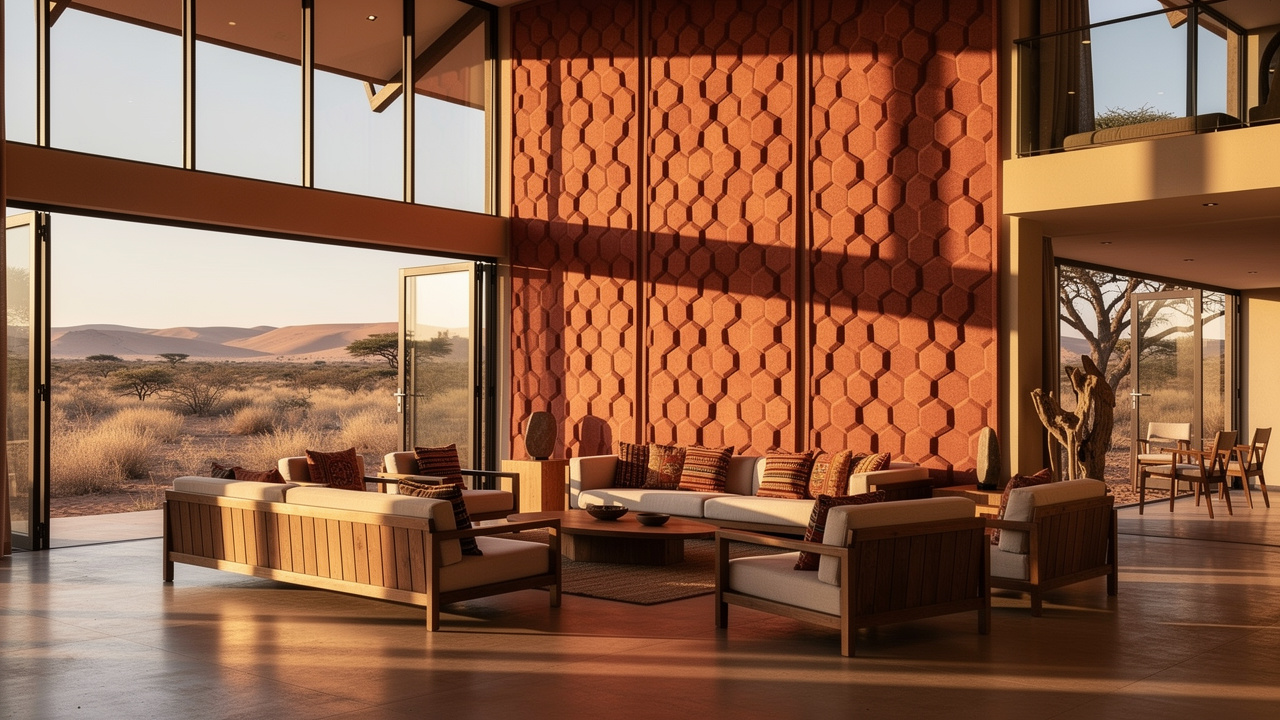
PET acoustic panels for Namibia’s hospitality and tourism developments have become a real specification concern, not a nice-to-have. Walk into a new lodge lobby in Windhoek or a beachfront restaurant in Swakopmund, and you’ll likely notice glass walls, polished concrete floors, and soaring ceilings designed to impress. Those same surfaces bounce sound around the room instead of soaking it up, turning a quiet breakfast service into a wall of clattering plates and raised voices. Guests notice, and noise complaints show up in online reviews faster than almost any other comfort issue in hospitality.
PET acoustic panels for Namibia’s hospitality and tourism developments solve this problem directly. Made from recycled polyethylene terephthalate (PET) fibers, these sound-absorbing boards cut reverberation without forcing designers to give up open floor plans or minimalist finishes. This article covers why Namibian lodges, hotels, and resorts need acoustic treatment, what makes PET panels perform well in guest spaces, how they support branding and design, what to check when sourcing panels, and how DeSound fits into that process for architects, contractors, and procurement teams.
Key Takeaways
PET acoustic panels reach high NRC ratings, absorbing sound effectively in lobbies, dining rooms, and conference halls without disrupting the visual design of the space.
Class A fire ratings and VOC-free composition make panels a safe choice for guest-occupied hotel and lodge interiors.
Custom UV printing, over 100 color options, and CNC-cut shapes let acoustic panels double as branding and design features.
Reliable bulk supply and technical guidance matter most on large, multi-room, or multi-property Namibian tourism builds.
Recycled PET content supports eco-tourism positioning and green building goals for developers and operators.
Why Do Namibian Hospitality Projects Need Acoustic Treatment?

Namibian hospitality projects need acoustic treatment because open floor plans and hard finishes turn ordinary conversation into distracting noise. Lodges, boutique hotels, and resort restaurants across Windhoek, Walvis Bay, and Swakopmund increasingly favor glass facades, polished concrete, and tiled floors that look striking in photos but reflect sound instead of absorbing it. A double-volume lobby with a stone floor and floor-to-ceiling windows can turn a simple check-in chat into an echo chamber, while an open dining room amplifies cutlery, chairs, and conversation until guests raise their voices to be heard. This matters commercially, not just visually, since guest satisfaction scores and online reviews increasingly mention noise as a complaint, right alongside cleanliness and Wi-Fi speed. Namibia’s tourism sector competes for the same international travelers courted by lodges across Southern Africa, so a property that feels calm holds a real advantage over one that feels chaotic. Acoustic comfort has become as important to guest experience as good lighting or a well-planned menu, and it costs far less to address during design than after opening, when retrofitting around finished interiors gets disruptive and expensive.
Common Noise Problem Areas In Lodges And Hotels
Noise problems cluster in predictable spots across a property, and spotting them early makes acoustic planning easier for architects and contractors alike.
High-ceiling lobbies and reception areas often echo the moment guests wheel luggage across hard floors.
Dining rooms and bars build up chatter and clatter as tables fill during peak service, the kind of reverberant noise studied in research on acoustic absorption behavior of recycled boards made from packaging waste materials.
Conference and event rooms need clear speech intelligibility to support meetings and presentations.
Guest rooms and corridors require sound privacy so conversations don’t carry between spaces.
What Makes PET Acoustic Panels Effective For Hospitality Spaces?

PET acoustic panels work well in hospitality spaces because they combine strong sound absorption with fire safety and a non-toxic composition suited to guest-occupied buildings. Each panel is made from thermally bonded polyethylene terephthalate fibers, the same recycled material found in food-grade bottles, pressed into a dense felt board without chemical binders or formaldehyde. That construction gives the panels a Noise Reduction Coefficient (NRC) that commonly ranges from 0.85 to 1.0, a range confirmed in recent research on bioplastic wall panel performance examining acoustic thermal and structural efficiency in interior architecture, meaning they absorb almost all the sound energy that hits them rather than bouncing it back into the room. High-NRC performance matters most in the large, hard-surfaced spaces typical of Namibian lodges and hotels, including double-volume lobbies, open dining halls, and conference rooms where voices would otherwise carry and echo. On top of acoustic performance, PET panels carry Class A fire ratings and contain no volatile organic compounds or glass fibers, so installers can handle them without special protective gear and guests face no exposure to airborne irritants. This combination of measurable acoustic performance and documented safety credentials is exactly what architects and procurement teams need when specification sheets and insurance requirements call for proof, not just a supplier’s word, that a material will perform as claimed in a fully occupied hotel or resort.
Sound Absorption And NRC Performance
NRC is a simple 0 to 1 scale showing how much sound a material absorbs, with 1 meaning almost total absorption. Thicker PET panels, and those mounted with an air gap behind them rather than flush against a wall, generally absorb more low-frequency sound, a finding echoed in studies on acoustic performance optimization of natural-fiber composite panels backed by air-gap-friendly substrates. This distinction matters most in double-volume lobbies, dining halls, and conference rooms, where deep, resonant noise is hardest to control.
| NRC Rating | What It Means | Best Suited For |
|---|---|---|
| 0.85 – 0.90 | Strong absorption, some reflected sound remains | Guest rooms, corridors, smaller dining areas |
| 0.90 – 0.95 | Very high absorption | Lobbies, mid-size conference rooms |
| 0.95 – 1.0 | Near-total absorption | Double-volume lobbies, open dining halls, large event spaces |
Fire Safety And Guest Occupant Compliance
Guest-occupied buildings demand strict fire safety, and Class A fire-rated PET acoustic panels are built to meet that standard. This classification confirms limited flame spread and low smoke development, both essential in hotels, lodges, and conference venues where evacuation routes must stay clear. Procurement teams and architects should request fire test certification before sign-off, since insurers and building inspectors typically require documented proof rather than verbal assurance.
How Can PET Panels Support Design And Branding In Tourism Developments?

PET acoustic panels support design and branding in tourism developments by functioning as a visible design feature rather than a hidden technical fix. Because panels are available in more than 100 color options, designers can match a lodge’s earthy, desert-inspired palette or a boutique hotel’s bold brand colors without settling for whatever stock shade happens to be available. Custom UV printing takes this further, letting a property print its own artwork, logo, or a Namibian-inspired motif, such as dune patterns or wildlife silhouettes, directly onto the panel surface so the acoustic treatment becomes part of the storytelling in a lobby or feature wall. Precision CNC cutting, meaning computer-controlled cutting that shapes each panel to an exact pattern, allows panels to form curves, hexagons, or other custom geometries similar to the recycled polyester fiber acoustic panels available in over 30 colors that suit a luxury safari lodge’s organic architecture or a modern urban hotel’s cleaner lines. Instead of treating acoustic performance and interior design as competing priorities, this level of customization lets a single product satisfy both the architect’s sound requirements and the interior designer’s visual concept for the space. For hospitality brands trying to stand out in a crowded Namibian tourism market, that combination turns a technical necessity into a genuine point of difference guests notice and remember.
Color, Printing, And Custom Shapes
A wide color range lets acoustic panels blend into a property’s existing palette or stand out as a deliberate accent wall. UV printing applies logos, artwork, or regional motifs directly onto the panel face, giving lobbies and feature walls a distinct identity. CNC cutting then shapes panels into ceiling clouds, curved features, or custom geometries suited to a lodge or hotel’s architecture.

Sustainability As A Guest Experience Differentiator
PET panels are made largely from recycled plastic bottles, giving developers a documented sustainability story that appeals to eco-conscious travelers drawn to Namibia’s conservation-focused tourism sector. That recycled content can support green building certifications such as LEED or Green Star, and it gives marketing teams a genuine claim to make rather than a vague sustainability slogan. For lodges built around conservation values, that alignment between material choice and brand story matters.
A useful rule of thumb for developers: treat acoustic material choice as part of the sustainability story from day one, not as an afterthought bolted on for marketing copy once the build is finished.
What Should Procurement Teams Look For When Sourcing Panels For Namibian Projects?

Procurement teams sourcing PET acoustic panels for Namibian projects should prioritize suppliers who can prove consistent quality across large orders. A single lodge or resort may need panels for dozens of rooms and public areas, and any variation in color, thickness, or NRC performance between production batches becomes obvious once panels sit side by side. Ready-stock availability also reduces delay risk, since made-to-order imports can add weeks to a schedule already tight around an opening date.
Logistics and support matter just as much as the product itself:
Confirm realistic lead times, since Namibia’s construction sector depends heavily on imported materials routed through South African ports and road corridors.
Ask for fire and acoustic test documentation upfront rather than after delivery.
Request coverage calculations so quantities match the actual space, not rough estimates.
Look for suppliers offering technical guidance throughout the project, not just at the point of sale.
Suppliers who provide these details up front tend to create far fewer surprises later in the build.
How DeSound Supports Hospitality And Tourism Projects In Namibia

DeSound supplies PET acoustic panels engineered for the guest-occupied spaces found in Namibian lodges, hotels, and resorts. Its range combines high-NRC acoustic performance with Class A fire-rated panels, custom UV printing, and more than 100 color options, so one product line can meet both the sound-control requirements architects specify and the visual identity hospitality brands want. Precision CNC cutting lets design teams shape panels into feature walls, ceiling clouds, or custom geometries instead of standard rectangles.
For contractors, distributors, and procurement managers, ready-stock availability and bulk supply capacity help keep multi-room or multi-property builds on schedule, and the technical support team assists with specification and coverage guidance from early design through installation.
The Takeaway
Acoustic comfort, fire safety, and design flexibility have become core requirements for any Namibian hospitality development competing for travelers, not optional extras added at the end of a project. PET acoustic panels answer all three needs at once, absorbing sound in open lobbies and dining rooms, meeting Class A fire standards for guest-occupied buildings, and offering the colors, printing, and custom shapes that let acoustic treatment double as a design statement.
Architects, contractors, and procurement teams planning a lodge, hotel, or resort in Namibia should bring acoustic specification into the conversation early, well before finishes are locked in. Consulting a specialized supplier like DeSound at the design stage helps align acoustic performance, fire compliance, and delivery timelines before construction schedules leave little room to adjust.
Frequently Asked Questions
Here are quick answers to common questions architects, contractors, and procurement teams ask when specifying PET acoustic panels for Namibian hospitality and tourism developments.
What Is The Typical NRC Rating Needed For A Hotel Lobby Or Dining Area?
Hotel lobbies and dining areas typically need PET panels with an NRC of 0.85 to 1.0, since high ceilings and hard floors demand strong absorption. Thicker panels mounted with an air gap improve low-frequency performance in these larger, more reverberant spaces.
Can PET Acoustic Panels Be Customized With Local Namibian Designs Or Lodge Branding?
Yes, PET acoustic panels support custom UV printing, which applies logos, artwork, or Namibian-inspired motifs directly onto the panel surface. This lets lodges and hotels turn functional acoustic treatment into a branded design feature across lobbies and feature walls.
Are PET Acoustic Panels Safe For Guest-Occupied Spaces Like Hotel Rooms And Restaurants?
Yes, quality PET acoustic panels carry Class A fire ratings and contain no VOCs, formaldehyde, or glass fibers. That non-toxic, low-smoke composition makes them appropriate for hotel rooms, restaurants, and other guest-occupied spaces where safety and air quality both matter.
How Long Does It Take To Source And Install PET Acoustic Panels For A Namibian Project?
Timelines depend on order size, but ready-stock panels install much faster than made-to-order imports, which can add weeks to a schedule. Since most panels reach Namibia through South African supply routes, confirming lead times and freight schedules early protects the construction timeline.
Do PET Acoustic Panels Hold Up In Namibia’s Coastal Or Desert Climates?
PET panels generally resist moisture better than foam-based alternatives, which suits coastal installations near Walvis Bay and Swakopmund. For desert and inland sites, confirm UV stability if panels face direct sunlight, since prolonged exposure can affect color over time.
Can One Supplier Handle Bulk Orders For Multi-Property Lodge Groups Or Hotel Chains?
A supplier with strong manufacturing consistency and stock availability can supply multi-property lodge groups without color or thickness variation between batches. Confirm production capacity and quality control processes before committing to a bulk order across several hotel or lodge sites.