
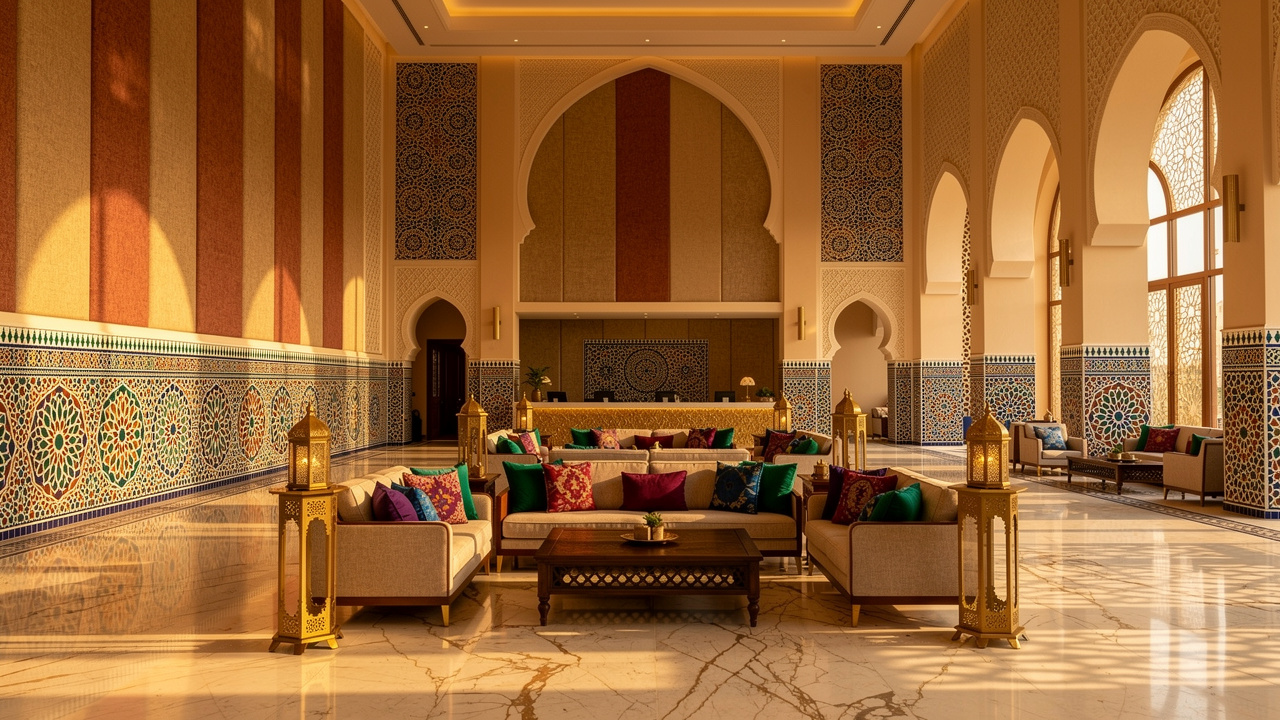
Morocco’s hotel and resort boom has created a familiar problem: stone floors, glass facades, and open-plan lobbies that look stunning but sound terrible. Guests complain about noisy restaurants, echoing corridors, and business travelers who struggle to hold a call in a busy hotel lobby. As tourism numbers climb in cities like Marrakech, Casablanca, and Tangier, developers face pressure to deliver five-star interiors without the harsh acoustics that come with hard, reflective surfaces.
This is exactly where PET acoustic wall panels for Morocco’s hospitality projects step in. These are sound-absorbing boards made from recycled polyester fiber, engineered to cut noise without forcing a compromise on design. This guide covers how PET acoustic panels perform in guest-facing spaces, what design and color options fit hospitality interiors, how fire safety compliance works, and how to source panels reliably for Morocco-bound projects. DeSound, a manufacturer supplying ready-stock and custom PET panels, comes up throughout as a practical reference point for teams sourcing acoustic materials for these builds.
Keep reading to see how these panels solve Morocco’s toughest hospitality acoustic challenges, from noisy dining rooms to demanding fire codes.
Key Takeaways
PET acoustic wall panels absorb sound while doubling as a finished decorative surface, which suits hotel lobbies, restaurants, and event spaces where both noise control and appearance matter equally.
NRC ratings between 0.75 and 0.95, along with verified fire safety certificates, are the two specification checkpoints that protect a project from compliance headaches later.
Reliable bulk supply, ready stock, and consistent batch quality prevent the delays that often plague import-dependent hospitality builds in Morocco.
DeSound supplies ready-stock, custom-printed, and Class A fire-rated PET panels built for the varied acoustic zones found across hotels and resorts.
What Are PET Acoustic Wall Panels and Why Do Hospitality Projects Need Them?

PET acoustic wall panels are sound-absorbing boards made from thermally bonded polyester fibers, usually recovered from post-consumer plastic bottles, pressed into a dense, felt-like board without formaldehyde or harsh chemical binders, a construction detailed in manufacturer engineering data for PET acoustic wall panels. That manufacturing process gives hospitality projects a material that is safe in enclosed guest spaces, resistant to mold, and consistent in performance from one production batch to the next, which matters when a single hotel wing might need hundreds of matching panels.
Morocco’s hospitality sector has grown quickly on the back of rising tourist arrivals, and many new builds lean on marble, glass, and tile for a luxury look that also reflects sound aggressively. Riads, boutique hotels, and international resort brands now need a way to tame reverberation in lobbies, dining rooms, and corridors while keeping the polished aesthetic guests expect. PET acoustic panels answer that need directly, since they absorb sound at the surface instead of hiding it under bulky, less attractive treatments.
How Do PET Panels Perform Acoustically in Hotels and Restaurants?

PET acoustic panels manage noise in hotels and restaurants by absorbing mid-to-high frequency sound waves, the exact range responsible for speech, clattering dishes, and general ambient chatter in busy dining rooms. Most quality panels achieve a Noise Reduction Coefficient, or NRC, between 0.75 and 0.95, and this Noise Reduction Coefficient explained simply tells you what share of sound energy the panel soaks up rather than bouncing back into the room, based on absorption testing across four standard frequency bands. A panel rated at 0.90, for example, absorbs 90% of the sound that hits it, leaving only 10% to reflect and contribute to echo. That distinction matters enormously in a hotel lobby with hard floors, where even a modest improvement in absorption can turn a harsh, echoing space into one where conversations feel calm and comfortable.
Performance depends on a few adjustable factors beyond the base material:
Thickness: panels in the 24mm to 50mm range handle low-frequency rumble from HVAC systems and crowd noise better than thinner boards.
Density: panels between roughly 200 kg/m³ and 400 kg/m³ offer firmer structure and steadier acoustic behavior across different frequency bands.
Mounting method: installing panels with a 25mm to 50mm air gap behind them, using battens or a rail system, noticeably improves bass absorption compared to gluing panels flat against a wall, a finding consistent with acoustic performance optimization research on fiber-based panel assemblies.
Surface treatment: perforated, slotted, or 3D-textured panels expose more surface area to sound waves and absorb more efficiently than a flat, smooth board.
For a hotel restaurant with a double-height ceiling or a conference hall hosting business tourism events, combining the right thickness with an air gap and a textured finish typically delivers the clearest, calmest acoustic result.
Panel Thickness by Hospitality Application
Choosing the correct thickness depends mainly on the room’s size, ceiling height, and the type of noise it needs to control, since thin panels suit speech-heavy spaces while thicker ones handle deeper, louder frequencies.
| Hospitality Zone | Recommended Thickness | Primary Frequency Target |
|---|---|---|
| Guest corridors | 9mm – 12mm | Speech and footsteps |
| Restaurants and lobbies | 12mm – 24mm | Broad frequency range |
| Event and conference halls | 24mm – 50mm | Low-to-mid frequency |
What Design Options Let Hospitality Projects Match Their Interior Vision?

Design flexibility is what separates PET acoustic panels from older acoustic materials, since a single product line can now deliver both sound control and a signature look for a hotel brand. DeSound’s range for hospitality projects includes over 100 color options alongside custom UV printing, which lets designers reproduce a resort’s logo, a geometric motif drawn from Moroccan tilework, or a custom-designed artwork directly onto the panel surface. Precision CNC cutting adds another layer of flexibility, turning flat boards into hexagons, waves, or fully custom shapes for feature walls in lobbies and reception areas.
Surface finish choices matter just as much as color for hospitality interiors, particularly in riads and boutique properties where texture carries much of the design story, and research suggests coverage doesn’t need to be total, since science-backed coverage rules on acoustic panel placement suggest that 25-40% wall coverage often achieves the needed absorption without treating every surface. Slatted panels that pair timber-look strips with acoustic felt backing suit warm, biophilic lobby designs, while 3D geometric and perforated finishes add depth to restaurant feature walls without looking like an obvious acoustic treatment. This range of options means a five-star resort and a smaller boutique guesthouse can both specify PET panels while landing on completely different finished looks.
Is Fire Safety Compliance Guaranteed With PET Acoustic Panels?

Fire safety compliance is not automatic with every PET acoustic panel on the market, so specifiers need to confirm a product’s rating rather than assume it. Quality panels intended for hotels, restaurants, and resort developments should carry a recognized classification, such as Euroclass B-s1, d0 under the EN 13501-1 European testing standard, or a Class A rating under comparable protocols, both of which confirm limited combustibility and low smoke output, as outlined in a typical PET panel technical datasheet covering fire and acoustic ratings. This matters enormously in guest-occupied spaces, where fire codes are strictly enforced and international hotel brands often apply their own safety standards that exceed local minimums.
Before finalizing any order, architects and procurement managers should request the actual test certificates and Material Safety Data Sheets rather than relying on a supplier’s general claims.
DeSound supplies Class A fire-rated panels along with the supporting documentation, which helps architects clear specification review without the back-and-forth delays that missing paperwork tends to cause on a tight construction schedule.
How Can Distributors and Contractors Source PET Panels Reliably for Morocco?

Sourcing PET acoustic panels reliably for Moroccan projects comes down to three things: consistent batch quality, realistic lead times, and a supplier willing to share technical proof before a bulk order gets placed. Because Morocco’s acoustic material market leans heavily on imports, distributors and fit-out contractors carry real exposure to shipping delays, customs holdups, and inconsistent panel batches that create visible color or texture mismatches across a large installation. Ready-stock availability removes much of that risk for renovation work and time-sensitive openings, since panels can ship without waiting through a full custom production run.
For larger new-build or multi-property rollouts, contractors should reference a full PET acoustics product catalogue when comparing absorption, color, and sizing options across suppliers:
Confirm minimum order quantities for custom colors or shapes.
Request physical samples to verify color and texture before committing.
Ask for batch consistency documentation covering any order that spans multiple production runs.
Seek technical support from a supplier who can advise on the right thickness, density, and mounting method for a specific room, saving architects from costly rework after installation.
Procurement managers should treat all of this as a checklist rather than a formality, because a single missed detail, whether a certificate, a sample, or a lead-time estimate, can push back an entire opening date.
Why DeSound Fits Morocco’s Hospitality Supply Chain
DeSound addresses these exact pressure points through ready-stock panels that support fast turnaround on renovations and time-sensitive new builds, paired with bulk supply capability suited to multi-property hotel rollouts across Morocco’s growing tourism regions. Its technical support team works directly with architects and contractors to match panel thickness, density, and finish to each hospitality zone, whether that’s a quiet guest corridor or a loud, double-height restaurant. Combined with precision CNC cutting and consistent manufacturing quality, this gives procurement teams a single, dependable source rather than juggling multiple suppliers for one project.
Final Thoughts
Hospitality projects in Morocco sit at the intersection of two demands that used to feel like a trade-off: a striking, design-led interior and genuine acoustic comfort for guests. PET acoustic wall panels close that gap by absorbing sound directly at the surface while offering the colors, textures, and custom shapes that hotel and resort brands rely on to stand out in a competitive tourism market. Getting the specification right still means checking NRC ratings against room type, confirming fire safety certificates, and verifying that a supplier’s sustainability claims hold up under scrutiny from green building certification bodies.

None of that works without a supply chain that actually delivers on time and in consistent quality, which is why bulk reliability deserves as much attention as the acoustic data sheet. Architects, contractors, and procurement managers planning hospitality builds in Morocco should request sample verification and full technical documentation before placing a bulk order, and the DeSound team remains available to support that process with ready-stock panels, custom design options, and the compliance paperwork specification teams need.
Frequently Asked Questions
Can PET Acoustic Panels Handle Morocco’s Coastal Humidity and Dry Interior Climates?
Yes, quality PET acoustic panels resist moisture and maintain dimensional stability across humid coastal zones and drier interior regions alike. For coastal properties, it’s worth confirming warping and delamination resistance with the supplier, since fluctuating humidity can stress lower-grade panels over a long service life.
Do PET Acoustic Panels Block Noise Between Hotel Guest Rooms?
Not on their own. PET panels are absorption products measured by NRC, not soundproofing products measured by Sound Transmission Class, so they reduce echo within a room rather than blocking sound between rooms. For guest room privacy, pair PET panels with a properly soundproofed wall assembly.
What Is the Typical Lead Time for Bulk PET Panel Orders Shipped to Morocco?
Ready-stock panels ship far faster than fully custom orders, which need time for color matching, CNC cutting, or UV printing before production begins. Contractors should engage a supplier during the design development phase to lock in realistic timelines before committing to a fixed opening date.
Can PET Panels Be Custom-Printed With a Hotel’s Branding or Artwork?
Yes, custom UV printing lets suppliers like DeSound reproduce logos, patterns, or artwork directly onto the panel surface. This turns an acoustic panel into a branded design feature for lobbies, reception walls, or restaurant interiors without adding a separate decorative layer.
How Do PET Panels Compare to Fabric-Wrapped Acoustic Panels for Hotel Interiors?
PET panels generally resist stains and dust better than fabric-wrapped fiberglass, which can degrade, sag, or discolor over time in high-traffic hospitality settings. That lower maintenance burden makes PET panels a stronger long-term choice for restaurants, bars, and lobbies with heavy foot traffic.
What Documentation Should Procurement Managers Request Before Finalizing an Order?
Request NRC and fire classification test reports, recycled content declarations, Material Safety Data Sheets, and warranty terms covering color fade and acoustic performance. This documentation protects against compliance issues and confirms the panels match what the specification actually calls for.